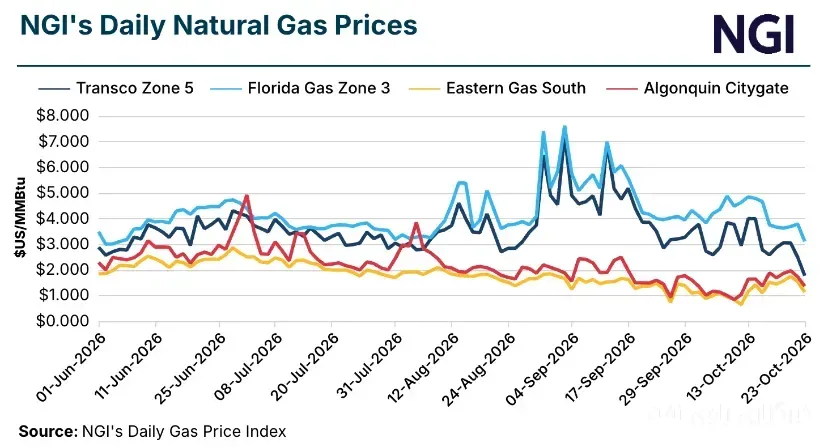
Attacks on Saudi Arabia's Petroline pipeline in early September 2026 have not only disrupted an export route but have gradually altered oil flows, increased tanker shipping rates, and intensified pressure on gas and coal prices. This disruption serves as a useful case study on how the immediate effects of a local infrastructure event can impact various commodity markets.
Details of the Attack and Its Impact on Exports
The Petroline pipeline connects oil and gas fields in Saudi Arabia's Eastern Province to an export terminal on the Red Sea at Yanbu, operating at a capacity of 5.5 million barrels per day before the attack. Of this amount, approximately 4.5 million barrels per day were exported through Yanbu, which is considered one of Saudi Arabia's main export routes to meet the needs of Mediterranean and Northwest European refineries.
On September 10, Houthi forces attacked pumping stations in two regions of Saudi Arabia. The damage was significantly worse than an incident in April that affected only one station and was repaired within three days. This time, several pumping stations have been disabled, although the pipeline itself remains generally intact. As of September 11, no oil has been loaded from Yanbu, and the terminal's inventories, which had already decreased before the attack, are only sufficient for three to five days of loading at normal rates.
Market Situation Analysis and Consequences
Saudi Aramco is constructing a bypass to circumvent the damaged sections of the pipeline, and it is estimated that complete repairs will take four to six weeks. Unconfirmed reports suggest that Saudi Arabia intends to restore about half of Yanbu's capacity sooner through this bypass, equivalent to 2 to 2.5 million barrels per day.
In the market, two distinct effects are observable: the price differential for North Sea oil has sharply increased, and Saudi oil shipments to Europe have been canceled from late September to November. These changes have reversed the oil flow pattern that had been forced to change due to restrictions on Saudi ships passing through the Bab-el-Mandeb Strait northward via the Suez Canal.
Despite this disruption, the global oil supply-demand balance indicates that the market is facing a shortfall of only one to two million barrels per day. This suggests that even a major disruption has not significantly thrown the market out of balance.
Regarding shipping rates, with the pipeline inactive, the need to transport Saudi oil by sea from the Strait of Hormuz has increased. Shipping rates for large tankers to Asia are currently around $30 per barrel, while rates from the Gulf of Oman are about $20 per barrel. This difference is attributed to the risks of passing through the Strait of Hormuz.