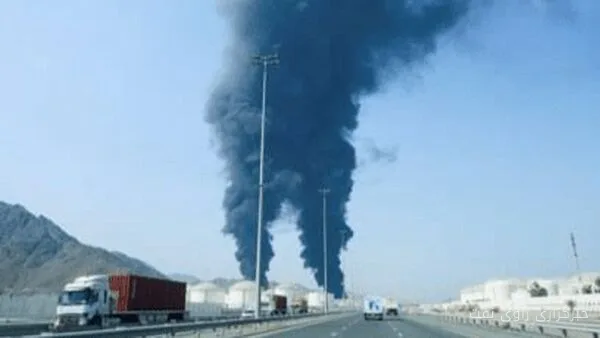
The oil target bank of Iran in the region has been updated in light of recent developments. Investigations show that the oil and gas capacities of five Arab countries, including Saudi Arabia, the United Arab Emirates, Qatar, Kuwait, and Bahrain, are currently within the range of Iran's missiles. This situation could have serious consequences for the global oil market.
Current State of the Oil Market
Oil prices have risen to $113 following recent tensions, indicating the high importance of Gulf oil for the global economy. Despite a ceasefire between Iran and the United States, the war in Yemen and Saudi Arabia continues, and the Strait of Hormuz is currently closed. However, the oil facilities of the UAE, Qatar, Kuwait, and Bahrain are not directly affected by this war.
Read more: Trump Administration Declares U.S. Oil Production Vital
Key Facilities and Oil Infrastructure
The Fujairah oil terminal on the coast of the Sea of Oman and outside the Strait of Hormuz is recognized as a vital center for oil storage and export. This terminal is connected to the Abu Dhabi oil fields via the Habshan-Fujairah pipeline and has a daily transfer capacity of 1.5 to 1.8 million barrels of oil.
The Abqaiq oil facilities in eastern Saudi Arabia are another key point that acts as a center for crude oil processing. This facility serves as the starting point for the strategic East-West pipeline (Petroline) and has a transfer capacity of 5 to 7 million barrels of oil per day.
The Yanbu terminal on the coast of the Red Sea is also recognized as the main gateway for Saudi oil exports to European markets, with a loading capacity of about 4.5 million barrels per day. The Ras Tanura terminal, the largest marine oil loading center in the world, with a capacity of 6 million barrels per day, supplies a significant portion of Saudi oil exports.
In Kuwait, the Mina al-Ahmadi terminal is recognized as the main export terminal for the country's crude oil and is heavily dependent on the Strait of Hormuz. Additionally, Bahrain, with the Sitra terminal, which includes the only oil refinery complex in the country, is engaged in the export of refined products.
Qatar, as one of the largest energy exporters in the world, has multiple terminals for exporting crude oil and natural gas. The Mesaieed terminal and Halul Island serve as the main centers for exporting crude oil and petroleum products from this country.
Given this infrastructure, any disruption in the security situation could have profound effects on global oil markets, and instability in this region could lead to price increases and a reduction in global supply.
Read more: Ariasaasol Polymer Company Introduced as Outstanding Exporter of the Country · Smart Investors Choose to Sell Oil Stocks and Buy MLP



