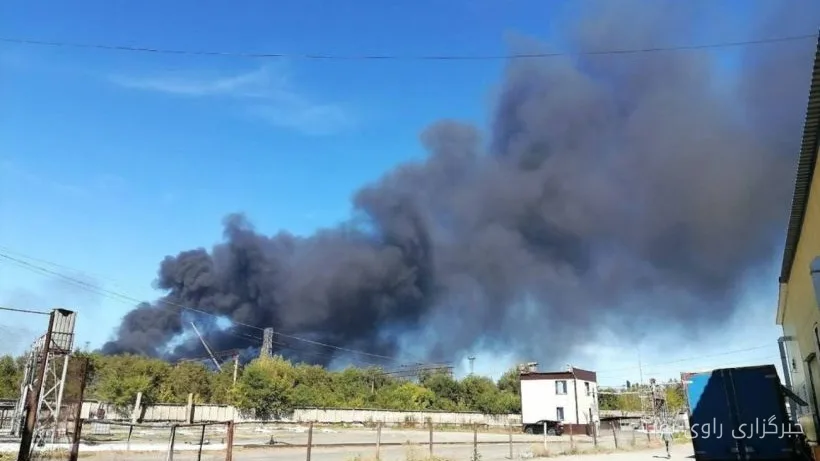
Ukraine recently attacked the Ryazan oil refinery located about 300 kilometers southeast of Moscow using its drones. This refinery, owned by Rosneft, accounts for nearly 5 percent of Russia's oil refining production. The attack occurred following Moscow's disregard for the ceasefire announced by Volodymyr Zelensky, the President of Ukraine.
Details of the Attack and Its Impact on the Refinery
Pavel Malikov, the governor of Ryazan, confirmed the occurrence of a fire at the facility, describing it as a large-scale attack by Ukraine. Although the severity and extent of the damage are still being assessed, it appears that this attack has dealt a serious blow to Russia's refining infrastructure. Ukraine carried out this operation just three days after agreeing to a ceasefire, which Zelensky stated was canceled due to the Russians' disregard for the agreement.
Read more: Inauguration of the Azadegan Oil Field with a Capacity of 600,000 Barrels per Day
Economic and Political Consequences
Attacks on Russian refineries, including the Ryazan refinery, have significant impacts on the global fuel market. Given the pressures on fuel prices, especially diesel in the United States, Zelensky stated in an interview that restrictions on attacks on refineries have ended. This decision could exacerbate the global energy crisis, especially as diesel prices in the United States remain above $6 per gallon.
Previously, Ukraine's drone attacks on Russian refineries had led to a significant reduction in fuel production and exports. Additionally, the Ryazan refinery has been targeted in similar attacks in the past, indicating the vulnerability of this facility to airstrikes. Considering that Russia is under pressure to repair damaged units by 2026, this attack could represent yet another setback for Russia's oil refining system, especially in the current context where fuel production is facing challenges.
Read more: Oil Prices Fall as U.S. Eases Restrictions on Russian Tankers · Russia Attacks Ukrainian Energy Facilities