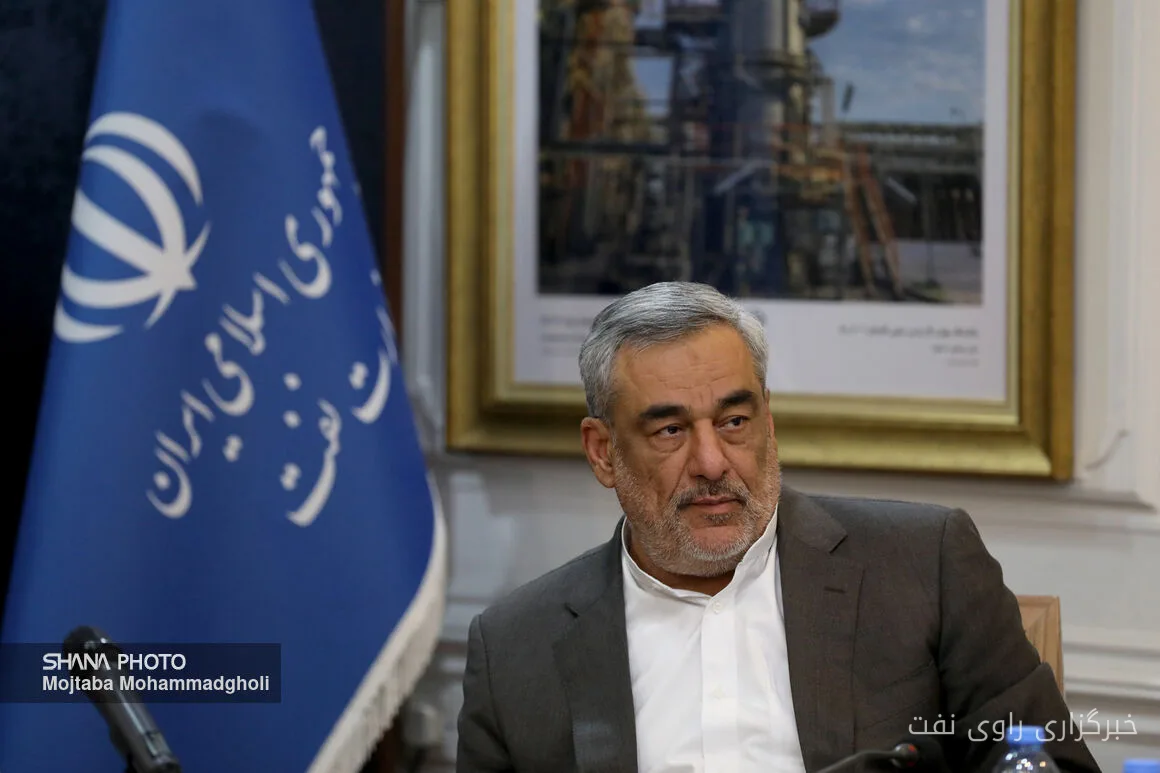
The gas feed sale contract for the NGL 3100 complex was signed in the presence of Amir Moghiseh, the Investment and Business Manager of the National Iranian Oil Company, and Javad Kamari, the CEO of Petro Refining Dehloran. This contract is designed to allocate associated gas from the Dehloran, Danan, Azar, Cheshmeh-Khosh, and Paydar Gharb fields as part of the feed for the Petro Refining Dehloran complex.
Capacity and Goals of the NGL 3100 Complex
The CEO of Petro Refining Dehloran, Javad Kamari, emphasized that NGL 3100 is not just a processing project, but it is at the intersection of collecting associated gas from oil, preventing the waste of hydrocarbon resources, producing value-added products, and developing the region's economy. The designed capacity of the complex for collecting associated gas is about 240 million standard cubic feet per day, and full utilization of this capacity could bring a significant portion of the gas that was previously flared into the production cycle and the country's economy.
Read more: President's Appreciation of the Ministry of Oil for Positive Performance
Sustainable Feed Supply and Job Creation
Kamari also pointed to sustainable feed supply as one of the main requirements for the economic operation of the complex. He said: "Currently, only half of the refinery's feed is being supplied, and it is expected that the National Iranian Oil Company will plan in such a way that the refinery's feed is fully supplied through a short-term and specific plan." The NGL 3100 complex will also have the capacity to create about 4,000 direct and indirect job opportunities, including 1,000 direct jobs and 3,000 indirect jobs.
The CEO of Petro Refining Dehloran highlighted the importance of employment and utilizing the capacity of local human resources in this project, stating: "The continuity of the complex's operations and the completion of the feed chain can create more opportunities for the region's youth and provide the groundwork for developing specialized skills and strengthening local businesses."
Reduction of Flaring and Environmental Impacts
One of the most important functions of the NGL 3100 complex is to collect associated gas from oil and prevent its burning in flares. Kamari added: "Any amount of gas that enters the processing instead of the flare is part of national resources that are converted into economic products, preventing its waste." This action, in addition to increasing resource efficiency, can help reduce emissions from flaring and improve the environmental conditions of surrounding areas.
The CEO of Petro Refining Dehloran also announced the daily delivery of more than 50 million standard cubic feet of methane gas since the launch of the complex, adding: "This amount of gas has been delivered to help meet the region's needs and reduce gas imbalance in Ilam province."
Read more: Russia and Iran Develop Joint Oil Cooperation Plan for 2024 to 2026 · Osaka Gas Acquires 5% Stake in LNG Browse Project from BP