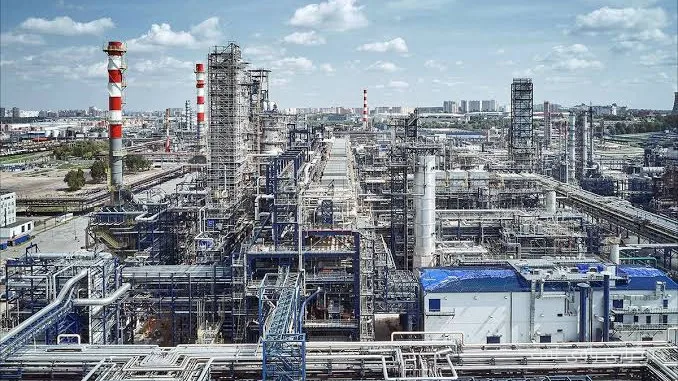
Vladimir Putin, the President of Russia, on Monday signed a new decree imposing serious restrictions on information related to the country's energy exports. These restrictions include refinery production statistics, contract details, and tanker routes, which must not be reported publicly from now on.
New Restrictions and Their Reasons
The Kremlin has cited the unfriendly actions of Washington and its allies as the reason for these restrictions and stated that these regulations will take effect immediately after signing, with the government having 10 days to specify exactly which product codes are covered by these restrictions. Additionally, information regarding refinery volumes in Russian plants, contract details including product names, quantities, prices, buyers, sellers, payment terms, transportation routes, and ship coordinates at export terminals are also subject to these restrictions.
Read more: Asid Shipping Receives Its First Kamsarmax Vessel
Consequences for Production Estimates and Market Conditions
According to the text of this decree, none of this information should be published through mass media or internet networks unless a company decides to disclose its statistics. After the annexation of Crimea in 2014, Moscow classified information related to oil production, and this level of confidentiality was intensified again after the attack on Ukraine in 2022. The new decree similarly subjects information related to refining and logistics to confidentiality, and because Western governments cannot independently verify this information, the difficulty of controlling prices increases.
The current situation of Russian refineries this year has faced serious challenges due to repeated attacks by Ukrainian drones. According to the International Energy Agency (IEA), Russia's gross national production in June dropped to 3.8 million barrels per day, which is 30% less than last year and the lowest level in over two decades. Additionally, gasoline production has decreased by approximately 20% and diesel by nearly 30%, with fuel shortages reported in 92% of Russian regions.
Officials in Moscow have described the situation as under control. Alexander Novak, the Deputy Prime Minister of Russia, recently stated that fuel supply has improved with additional deliveries from refineries, while Putin himself estimated that about 10% of refineries still need repairs.
Read more: Brent Oil Above $105 Following Stalemate in US-Iran Peace Talks · Hedayatollah Khademi Warns of 400 Million Cubic Meters Gas Imbalance



