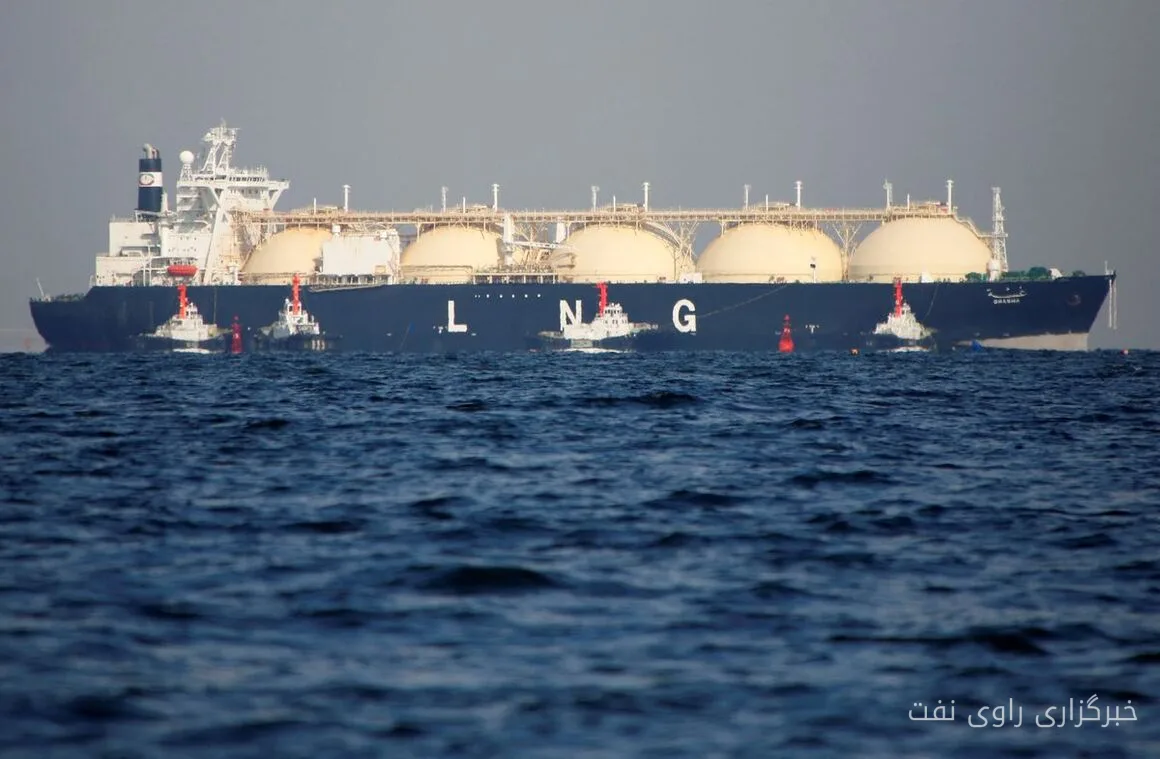
Industry managers predict that with the end of the war between the United States and the Israeli regime against Iran and the resolution of the supply crisis in the Middle East, LNG demand in China and India, as two major Asian markets, will improve. This change could gradually lead to a reversal of the trend of coal and oil consumption for electricity generation.
Decrease in LNG Exports and Rising Prices
The conflicts in the Middle East have significantly reduced LNG exports from Qatar and the United Arab Emirates through the Strait of Hormuz. This strait is recognized as a key passage for one-fifth of the world's crude oil and LNG supply. This crisis has led to rising prices and decreased demand in Asia. Cedric Cremers, head of gas at Shell, the world's largest LNG trader, estimated that the global market has lost about 36 million tons of Middle Eastern LNG supply so far this year.
Read more: Intellia Therapeutics: Is Securing $400 Million Really Worth It?
Impact of Prices on Indian Demand
As winter approaches and Asian buyers compete with European customers for limited market resources, spot LNG prices in Asia have risen from around $10 per million British thermal units (MMBtu) before the war to about $30. Deepak Gupta, chairman of GAIL, India's gas company, said at the GasTech conference in Bangkok, "Prices have skyrocketed, and this will undoubtedly affect demand in India as many industries are impacted by prices." He added that various industries may turn to other fuels if gas becomes unaffordable.
Since the start of the war, GAIL and PetroChina, China's largest LNG importer, have formed task forces to find alternative cargoes. Liu Yizhu, CEO of PetroChina International (PCI), announced that the company has acted quickly to secure supply. Gupta also mentioned that India was initially forced to limit gas consumption.
Forecast for Demand Improvement
Executives from ExxonMobil, GAIL, and PetroChina International predict that the conflicts in the Middle East will have a temporary impact on demand. Gupta said, "We hope this situation will be very short-term and that things will return to normal in the coming days and in the medium to long term." He also referred to new LNG capacity that may become operational in the next four to five years, amounting to about 150 to 200 million tons.
Yizhu also noted the growth in electricity consumption and predicts that as LNG prices return to the normal range of $7 to $9 per million British thermal units, demand from gas-fired power plants will increase. He stated that this change is due to a temporary drop in demand caused by rising prices, and the loss of demand in China seems unlikely.
Andrew Barry, vice president of global LNG marketing at ExxonMobil, also pointed to the growth of LNG demand in China in the long term, stating, "Extensive infrastructure for LNG imports has been built along China's eastern coast, and we are optimistic about demand growth until 2050." He emphasized that the diversification of LNG sources and a focus on supply costs remain priorities for the company.
Read more: Swedish Club Warns About Southern Routes as a Third Option for Panama Deviations · Increase in LNG Demand in China and India After Price Normalization