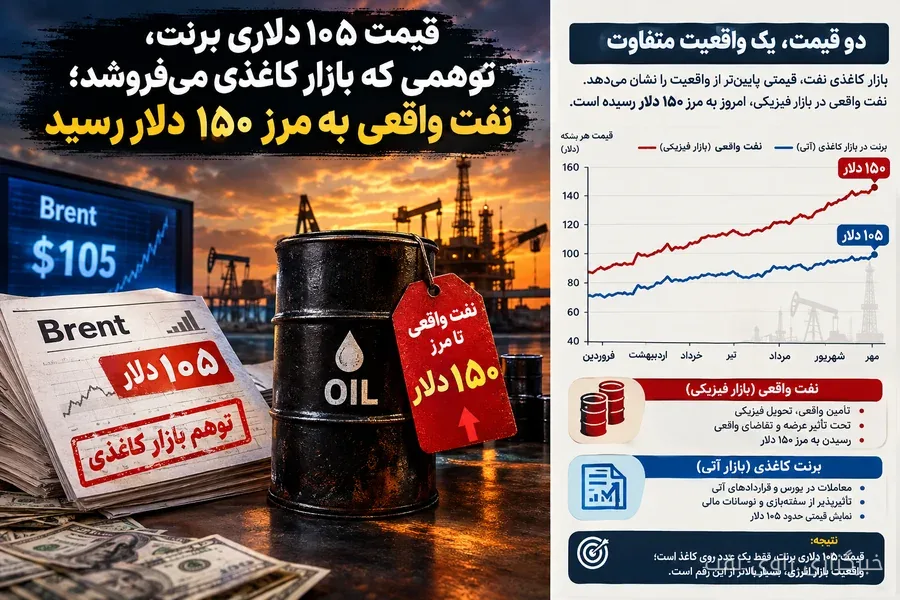
Mike Wirth, CEO of oil giant Chevron, stated that the price of physical crude oil delivered in Asia is now closer to $150 per barrel than $100. These remarks reflect a reality that is easily overlooked by mainstream media.
Price Review and Existing Gap
According to published data, the price of Brent crude futures in today's trading has reached $105.48. However, the distance between the physical oil price and futures contracts has reached a level that has been unprecedented in over three decades. Statistics show that the price of Dated Brent (North Sea physical oil) has recently reached around $120 per barrel.
Read more: Agreement between the U.S. and Russia for the supply of 36 million barrels of diesel
Reports indicate that the gap between the physical and paper oil prices has reached about $31; meaning that a refinery that needs a barrel of real oil for its current operations must pay about $131 for it.
Factors Affecting Oil Prices
The flow of oil from the Strait of Hormuz has decreased, and what remains is mainly transported via ship-to-ship transfer. This costly process contributes to the final fuel price increase. According to Energy Aspects, the price of Brent crude in the futures market is now only 60 to 70 percent of the actual delivery cost of crude oil in Asia.
Francisco Blanch, head of commodity strategy at Bank of America, warns that if supply disruptions continue until next spring, the price of Brent crude could exceed $150. Additionally, John Kemp, a senior oil market analyst, has stated that the cash price of Forties crude has reached over $140 per barrel.
Goldman Sachs also emphasizes that despite the return of Gulf oil exports to 22 to 23 million barrels per day, the physical oil price remains high. This gap is due to the risk of war and declining global reserves, which drives buyers towards immediate supply procurement.
Reports indicate that the prices of petroleum products such as diesel and gasoline are twice that of crude oil, a situation that has been unprecedented in history and reflects a deep mismatch between financial expectations and supply reality.
Read more: Saudi Aramco announced full crude oil supply to Europe for November · Increase in the number of oil drilling rigs in the United States



