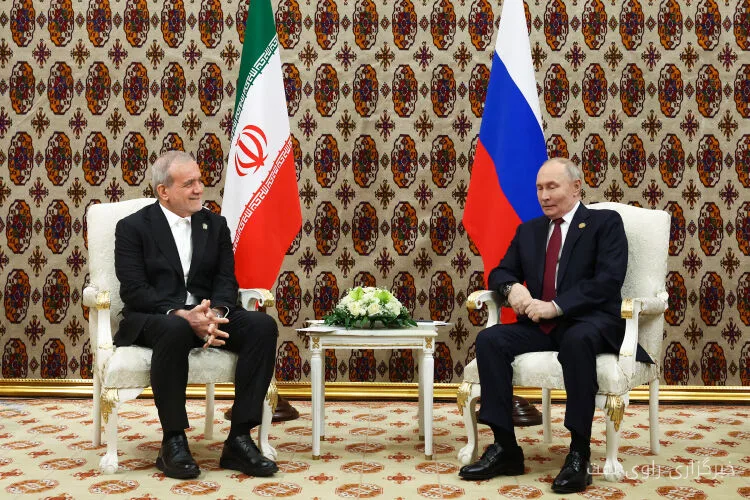
Masoud Pezeshkian, the Vice President of the Islamic Consultative Assembly of Iran, and Vladimir Putin, the President of Russia, emphasized the necessity of strengthening economic and energy cooperation between the two countries during their recent meeting. This meeting was held to review the achievements of bilateral relations and to explore ways to expand cooperation in key sectors including energy, agriculture, transportation, and trade.
Energy Cooperation and Joint Projects
During this session, the parties emphasized the need to expedite the finalization and completion of joint projects. These projects include investment in energy infrastructure and the exchange of modern technologies. The strategic relationship between Iran and Russia in the energy sector, especially in oil and gas, is one of the main pillars of the interactions between the two countries.
Read more: Crescent Energy signed a $3.85 billion contract for Eagle Ford assets
Iran, as one of the largest oil and gas producers in the world, with a daily production capacity of 4.5 million barrels of crude oil and 900 million cubic meters of gas, is seeking to strengthen its relations with Russia. On the other hand, Russia, with a daily production capacity of 10.5 million barrels of oil and 700 billion cubic meters of gas, is recognized as one of the main players in the energy market.
Economic and Political Impacts of Cooperation
The expansion of economic cooperation between Iran and Russia has been expressed as a means to secure the national interests of both countries and strengthen regional stability. This cooperation could help reduce dependence on Western markets and increase the economic influence of these two countries in the region. Additionally, with the signing of several long-term agreements for investment in energy infrastructure, it is expected that the exchange of modern technologies will also be facilitated.
In this context, joint investments in various fields including refineries, pipelines, and natural gas facilities can help improve energy infrastructure in the region. Ultimately, these actions could lead to economic development and increased employment in both countries.
Read more: Increase in oil prices due to Iran's attacks on tankers in Hormuz · Agreement between Tajikistan and Kyrgyzstan with Iran for oil supply



