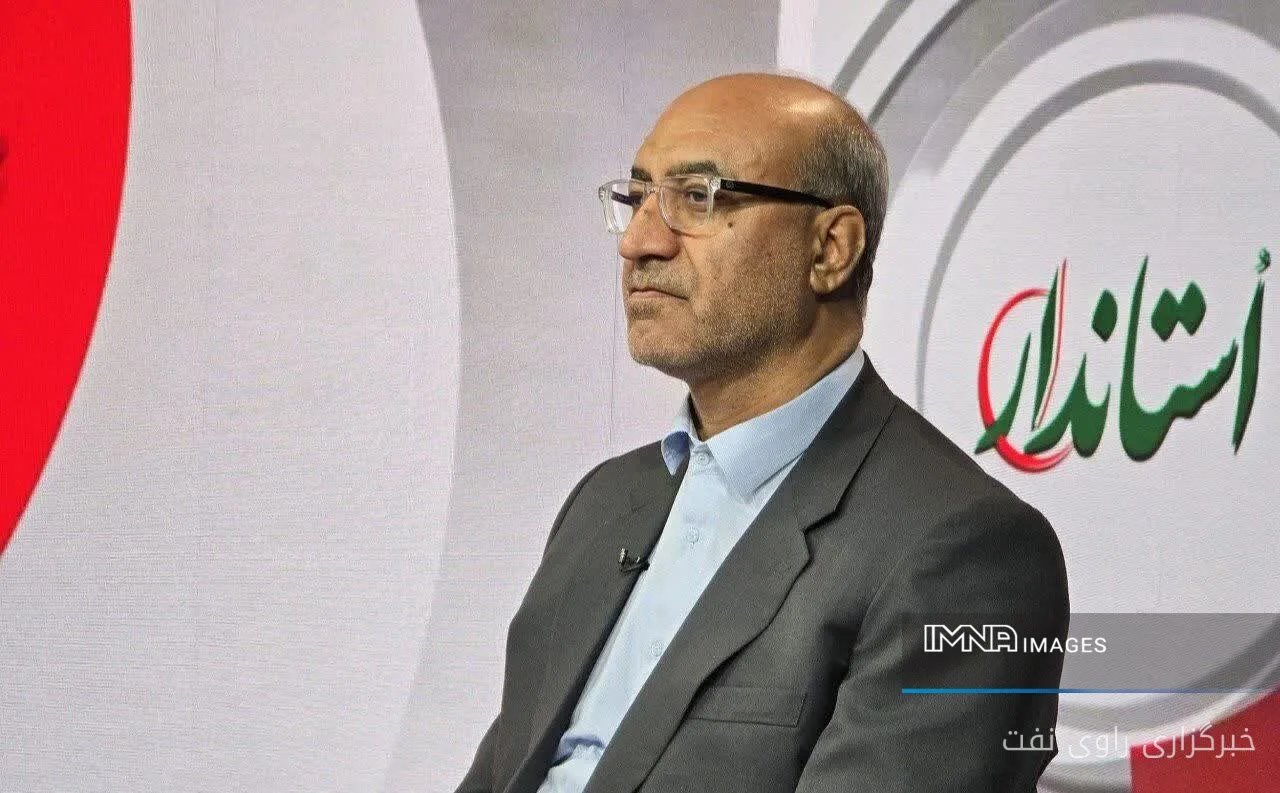
Manouchehr Habibi, the Governor of Kermanshah, announced the goal of transforming Kermanshah into a logistics, agricultural, and petrochemical hub for the country by outlining the province's border, industrial, and agricultural capacities. Kermanshah, with a 371-kilometer shared border with Iraq and the presence of six official borders, has a suitable position for the development of trade and exports.
Increasing Export Share to Iraq
Habibi emphasized the planning to increase Kermanshah's share of Iran's exports to Iraq from about 40% to 50-60%. He mentioned the organization of border marketplaces and the establishment of advanced equipment, stating: "Accelerating customs procedures is among the actions being pursued to achieve this goal."
Read more: Ali Kashouri is hopeful about addressing energy imbalance challenges in the Ministry of Oil
The Governor of Kermanshah also referred to the daily movement of about two thousand commercial trucks from the province's borders and introduced the Parviz Khan border as one of the important transit borders of the country. The geographical position of Kermanshah has created significant potential for the development of trade exchanges with Iraq and strengthening the province's position in transportation corridors.
Logistics and Petrochemical Projects
Manouchehr Habibi announced the pursuit of a project to establish a logistics village in western Iran in Kermanshah, stating: "The site selection for this project has been done in collaboration with the Islamic Republic of Iran Railways, and the logistics village will be built on an area of 240 hectares." He predicted that comprehensive studies for this project would be completed within the next month, and negotiations have also been held with several private investors for participation in its implementation.
The Governor of Kermanshah also referred to the Kermanshah-Khosravi-Baghdad railway projects and emphasized that during the recent visit of the Iraqi Prime Minister to Iran, there was an emphasis on accelerating the implementation of this project. In this context, during the President's visit to Kermanshah, a loan of 38 trillion tomans was approved to support industrial and production units.
Habibi reported that three petrochemical complexes are active in Kermanshah, stating: "Islamabad West Petrochemical is 65%, Sanqur Petrochemical is 60%, and the second phase of Kermanshah Petrochemical has 88% physical progress. With the completion of these projects, the province's position in the petrochemical industry will be strengthened."
He also referred to Kermanshah's agricultural capacities, stating: "The province, with about 950,000 hectares of arable and garden land, produces about five and a half million tons of agricultural products annually. Kermanshah ranks high in the production of wheat, chickpeas, and sugar beets."
In conclusion, the Governor of Kermanshah announced the implementation of modern garden projects on four thousand hectares of land in the western part of the province, stating: "In order to protect underground water resources, about 2,000 unauthorized wells have been closed, which has helped increase underground water reserves by about 85 million cubic meters."
Read more: Mohammad Sadegh Azimi Far approved the outsourcing of aviation refueling centers · Aref expressed condolences for the passing of Khalili Iraqi, a pioneer of industry and entrepreneurship in Iran



