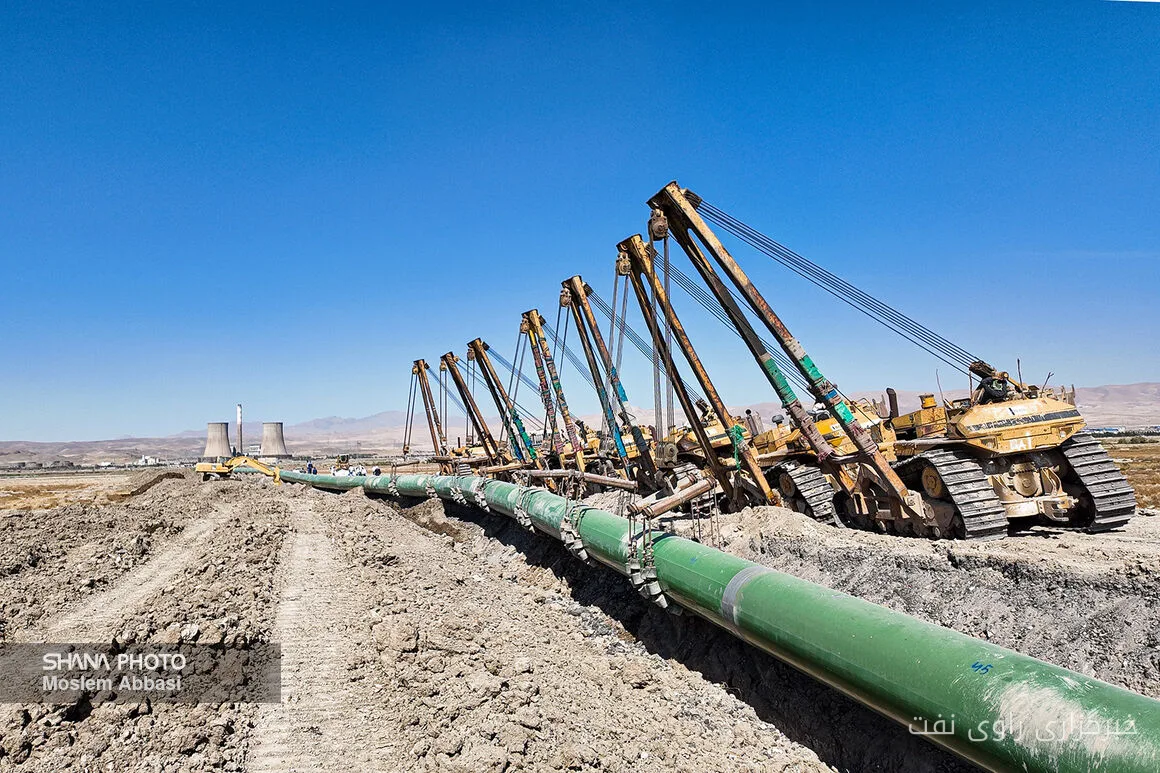
Asadollah Mehri, the manager of Region 2 of Iran's gas transmission operations, emphasized the importance of this region in the sustainability of the country's gas transmission network and announced recent measures to ensure the security of gas transmission in emergency conditions. This region, with 5,280 kilometers of pipelines, 22 pressure boosting facilities, and 88 turbo compressors, is considered one of the key areas of the gas transmission network.
Extensive Capacities of Region 2 of Gas Transmission Operations
Mehri stated that Region 2 of Iran's gas transmission operations includes approximately 161,000 inch-kilometers of pipeline and over 12.8 million square meters of pipeline surface area. Additionally, this region has over 3.6 million cubic meters of pipeline volume, 315 intermediate valve stations, and 160 cathodic protection stations.
Read more: China resumes fuel exports after a one-week suspension
The extensive capacities of this region have doubled its responsibility for the safe and sustainable transmission of gas to major consumers and various economic and social sectors of the country. Mehri, referring to maintenance plans, announced that 61 maintenance operations at various levels of turbines and compressors have been scheduled, of which 40 have been completed and 8 are currently underway.
Operational Measures and Network Reorganization
Mehri described the actions taken this year, stating: "Following changes in operational conditions, a fundamental reorganization of the facilities and main pipelines in the region has been carried out, and the layout of the facilities and active units has been redesigned to increase the flexibility of the network." He added that connecting valves between pipelines have also been used to adapt the network to new conditions, and stored gas has been directed to commercial and residential consumers.
The manager of Region 2 of gas transmission operations also announced the transfer of critical equipment to safe locations to reduce vulnerability and increase the safety coefficient of the facilities. Mehri identified the most important projects in the region as the temporary handover of the Ardestan 8 facilities and the commissioning and connection of the sixth unit of the Dehgh 2 and 3 facilities, which have been implemented to enhance the reliability and preparedness of the gas transmission network.
In this context, conducting a 72-hour test of three units of the newly constructed Ardestan 8 facilities and replacing the 30-inch inlet valve of unit A, as well as installing 2-inch class 600 valves on the bypass lines of the gas compressors of the Petaveh 10 facilities, have also been among the actions taken during this period.
The technical management of 22 pressure boosting facilities and the inspection and servicing of launchers and receivers in the region are other significant actions aimed at improving the performance of the gas transmission network. These efforts are essential to maintain the sustainability and security of the gas transmission network in emergency conditions and to meet consumer needs under all necessary circumstances.
Read more: Shell acquires 30% stake in the Bidu Nord Echo Ner oil project · Change in the board of directors of the National Industrial Steel Group of Iran with two new members



