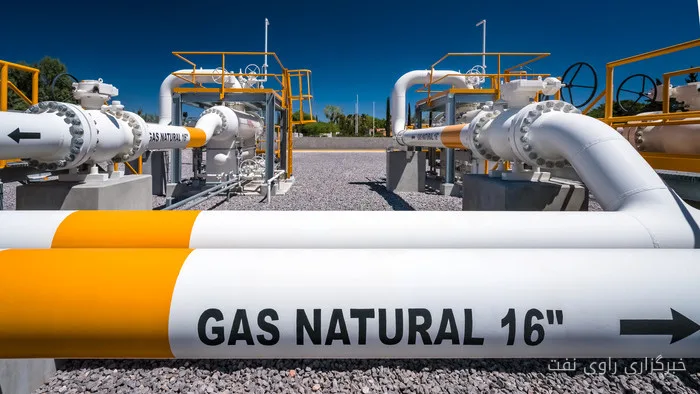
Kinder Morgan has resumed the Texas to Mexico gas pipeline activities after declaring a state of force majeure due to technical issues. These problems were identified on October 5, and parts of the system, including the Rio Bravo and Cenagas delivery stations, were isolated.
Details of Technical Issues
Kinder Morgan declared a state of force majeure on October 6. However, on Thursday, the company announced that the issues had been resolved and gas shipments to Mexico had restarted. Although the interruption was short, Mexico, due to its high dependence on gas imports from the United States, cannot afford even brief interruptions.
Read more: Oil prices return to an upward trend on Thursday
Mexico's Dependence on U.S. Natural Gas
About 75 percent of Mexico's natural gas is supplied from Texas, making it the largest buyer of U.S. pipeline gas. U.S. gas exports to Mexico have increased from about 1 billion cubic feet per day in 2010 to around 8 billion cubic feet per day currently. The Mexican pipeline operator CENAGAS had warned that gas flows could decrease by up to 20 percent due to this interruption.
CENAGAS director, Cuauhtémoc García, described the situation as critical and stated that Mexico has approximately three days of gas storage. The country lacks large-scale underground storage similar to the United States, which increases its energy sector's dependence on continuous gas deliveries from the north. This dependence has grown with Mexico's increased use of natural gas for electricity generation and industrial demand.
The government of Claudia Sheinbaum is considering limited use of hydraulic fracturing methods to boost domestic gas production. Mexico also plans to invest about $8 billion in pipeline investments to strengthen its gas network, although none of these measures will quickly resolve the storage issue.
The Tennessee Gas Pipeline transports gas from production areas in Louisiana, South Texas, the Gulf Coast, and Appalachia to markets in the United States, Canada, and Mexico. Interruptions in sections feeding into the Mexico border can have far-reaching effects beyond the damaged pipeline itself. This recent interruption was not long enough to create a sustained supply shortage, but it allowed Mexico to reassess its gas system calculations.



