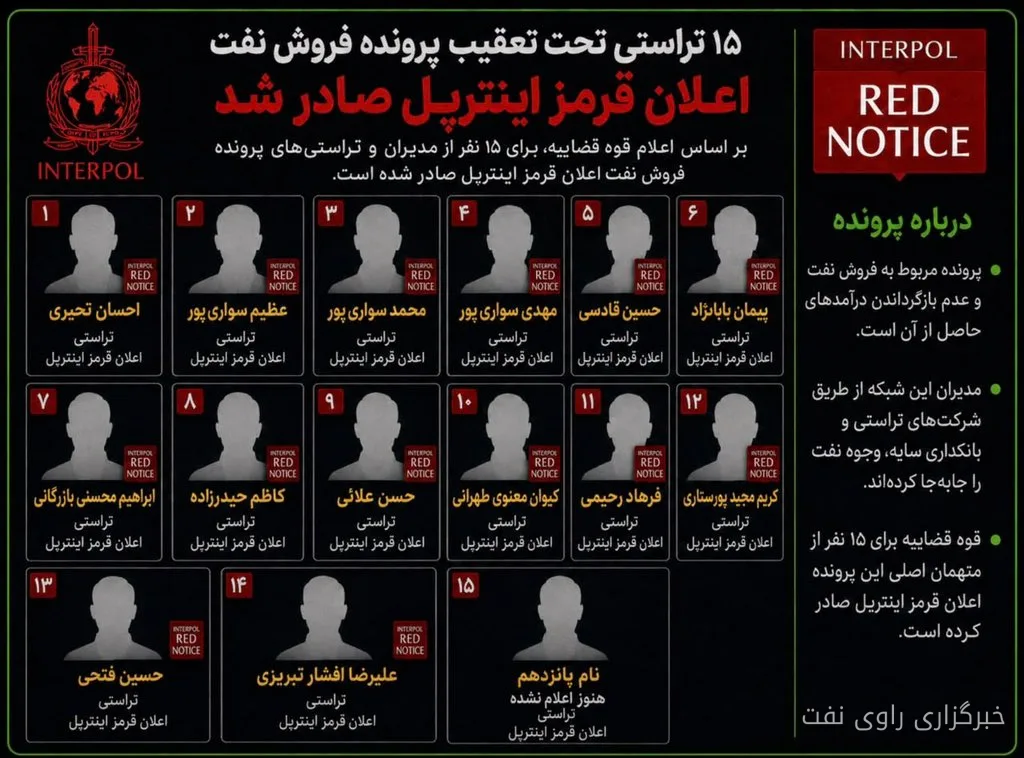
Following legal and judicial pursuits, the judiciary of the Islamic Republic of Iran has successfully identified and issued an Interpol Red Notice for 15 individuals among the managers and trustees related to the oil sale case. This action has been taken to combat corruption and prevent financial abuses in the country's oil industry. This case reflects a large and complex oil sale network that, according to officials, has transferred billions of dollars of the country's oil revenues abroad.
Names Under Pursuit
The following names appear on this list:
- Ehsaan Tahiri
- Azim Savaripour
- Mohammad Savaripour
- Mehdi Savaripour
- Hossein Ghadasi
- Peyman Babanzadeh
- Ibrahim Mohseni Bazargani
- Kazem Heydarzadeh
- Hasan Alai
- Keyvan Ma'navi Tehrani
- Farhad Rahimi
- Kareem Majid Pourestari
- Hossein Fathi
- Alireza Afshar Tabrizi
These individuals have been identified as the main suspects in a large case that, due to its extensive dimensions, has become one of the most important judicial cases in the oil sector today. Although the judiciary has not officially disclosed further details about this network, evidence indicates a significant amount of money that has left the country and has not yet returned to the national treasury.
Dimensions of the Case and Consequences
The oil sale case clearly indicates the existing weaknesses in the supervisory and managerial system of the country's oil industry. These weaknesses have not only led to financial abuses but have also harmed public trust and the country's credibility on the international stage. Therefore, the issuance of the Interpol Red Notice is seen as a positive step towards combating corruption and returning financial resources to the country.
Analysts believe that such judicial pursuits can help improve the economic situation and restore public trust in the executive system. This case can also serve as a model for other countries facing financial corruption in key industries, especially the oil industry.
Ultimately, these events demonstrate the serious determination of officials to combat corruption and improve the country's economic situation. It is expected that with the continuation of investigations and clarification of the status of this case, the groundwork will be laid for the return of financial resources and the strengthening of supervisory and managerial structures in the oil industry.