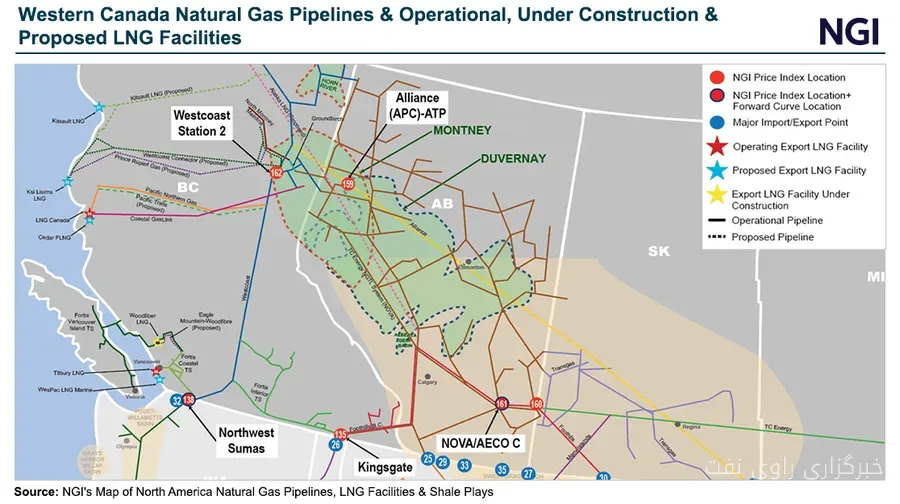
The five Indigenous Nations in the province of British Columbia have joined the economic participation in a major natural gas transportation system in Canada by securing financial benefits related to the Coastal GasLink pipeline owned by TC Energy. This move represents the expansion of Indigenous economic participation in the natural gas industry, which is on the verge of significant growth in liquefied natural gas (LNG) exports.
Details of the Coastal GasLink Project
The Coastal GasLink pipeline, stretching 670 kilometers, transports natural gas from the Mackenzie region in northern British Columbia to LNG facilities in the Kitimat area. This project, which has a transportation capacity of 2.1 billion cubic feet of natural gas per day, is recognized as one of the key projects in Canada's development plans to increase energy exports to global markets.
Read more: OPEC Energy Ministers Announce Increase in Oil Transportation Costs
Partnership of Indigenous Nations
The partnership of the five Indigenous Nations, including the Wet’suwet’en, Gitxsan, and several other nations, not only helps in better understanding the needs and desires of Indigenous communities but also leads to the creation of job and economic opportunities for these communities. This investment allows the Indigenous Nations to directly exploit the natural resources of the region and play an active role in decision-making related to energy projects.
This action can also help increase the confidence and economic self-sufficiency of the Indigenous Nations, enabling them to have a greater involvement in developmental processes that affect their lands.
Economic and Social Implications
Investment in the Coastal GasLink pipeline can have positive impacts on the local economy and beyond. Increased job opportunities, improved infrastructure, and access to natural resources are among the benefits of this project. Additionally, this partnership can serve as a model for other energy projects in the future and demonstrate the importance of collaborating with Indigenous communities in sustainable development.
Given the growing demand for natural gas in global markets, the Coastal GasLink project and the partnership of Indigenous Nations can be seen as an important step towards meeting Canada's future energy needs and enhancing the living standards of Indigenous communities.
Read more: Mercury Begins Production in New Projects · Natural Gas Production Resumes After Iceaya Storm



