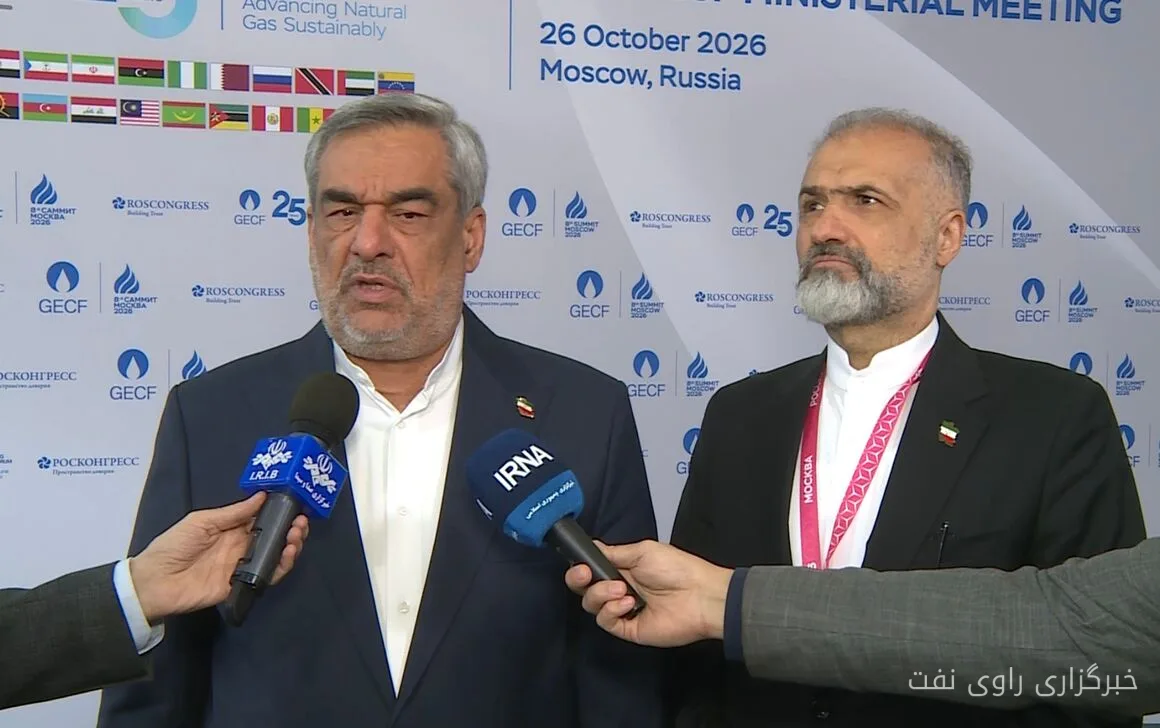
Hamid Bord, the head of the Ministry of Oil, today (Monday, October 25) emphasized the importance of joint cooperation to strengthen energy security on the sidelines of the 28th meeting of the Ministers of Oil and Energy of the Gas Exporting Countries Forum (GECF) in Moscow. Bord, commemorating the memory of the martyr Imam of the Revolution and the innocent martyrs, including the children of Minab and athletes of Lamerd, said: "Cooperation among GECF member countries should be based on common principles, the provisions of the charter, and a belief in comprehensive cooperation."
The Role of Joint Cooperation in Energy Security
Bord emphasized that this cooperation could help prevent wars and international pressures that affect global energy security. He noted that the current state of the energy market clearly shows the need for serious and strategic cooperation among gas-producing countries due to international instabilities and economic challenges.
Iran's Proposals for Investment and Technology
The head of the Ministry of Oil stated that Iran has presented constructive proposals at this meeting, saying: "We have offered proposals for joint investment, technology transfer, and exchange of experiences among member countries, which have been well received." These proposals were particularly focused on research and development projects and optimizing natural gas production processes and energy efficiency.
The summit of the heads of the Gas Exporting Countries Forum is held every two years. The first summit of this forum was held in 2011 in Doha, Qatar, followed by Moscow in 2013, Tehran in 2015, Santa Cruz, Bolivia in 2017, Malabo, Equatorial Guinea in 2019, Doha in 2022, and Algiers in 2024 as hosts of subsequent meetings. Since its establishment, this forum has also held 27 ministerial meetings.
The GECF consists of 12 main members, which are: Algeria, Bolivia, Egypt, Equatorial Guinea, Iran, Libya, Nigeria, Qatar, Russia, Trinidad and Tobago, the United Arab Emirates, and Venezuela. Observer countries include Angola, Azerbaijan, Iraq, Malaysia, Mauritania, Mozambique, Peru, and Senegal.
According to announced statistics, member countries collectively hold about 70% of the world's proven natural gas reserves, 38% of commercial gas production, and 42% of global gas exports. Their share of liquefied natural gas exports is also estimated to be around 47%.
Read more: Hamid Bord seeking to develop gas exchanges with GECF countries