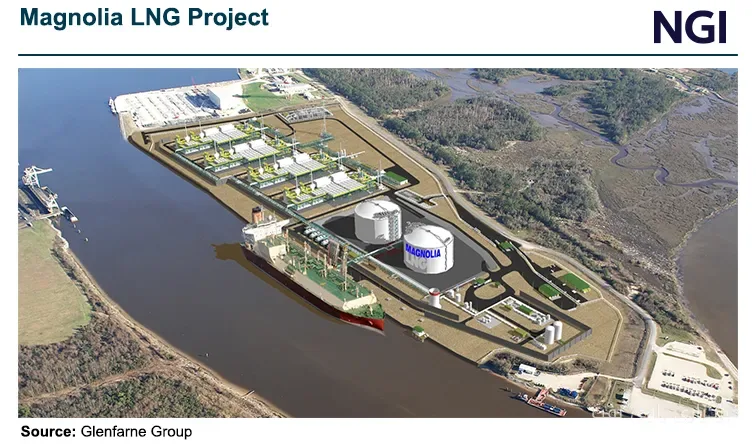
The Magnolia LNG natural gas export project located in Louisiana has recently been extended for another five years for the start and completion of its facilities, following approval from federal authorities. This decision came after an extension request submitted this year by one of the subsidiaries of the Glenfarne Group.
Details of the Magnolia Project
The Magnolia project is designed with an annual export capacity of 8.4 million tons of liquefied natural gas (LNG). This project is of significant importance as part of the United States' efforts to increase energy exports and meet global natural gas market demands. Given market changes and the need for new facilities, this project could play a crucial role in balancing supply and demand.
Challenges and Delays
Numerous delays that have occurred in similar projects during the Biden administration have led this project to seek an extension. Federal authorities have granted the Glenfarne Group additional time to complete the project in light of these challenges. This decision clearly reflects changes in U.S. energy policies and the need for flexibility in the development process of large-scale projects.
Considering the existing delays and challenges, it is expected that the Glenfarne Group will have a precise plan for the project's progress during the new timeframe. This may include closer collaboration with local and federal authorities, improving financing processes, and optimizing construction program execution.
Implications of the Project Extension
The five-year extension of the Magnolia project could enhance investor confidence in the LNG market and also aid in the development of the necessary infrastructure for future energy supply. This project is not only significant for the Glenfarne Group but also for the U.S. energy market and its international partners. Given the increasing global demand for liquefied natural gas, projects like Magnolia can contribute to energy security and the expansion of export markets.



