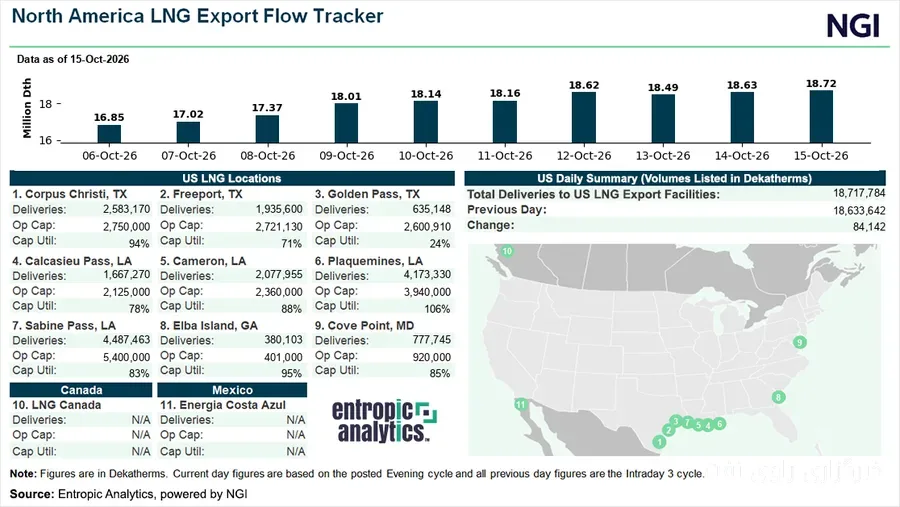
The United States Federal Energy Regulatory Commission (FERC) announced on Thursday a proposal to advance public licenses for specific activities in liquefied natural gas (LNG) projects. This action aims to enhance regulatory certainty and facilitate the licensing process in this sector. With a significant increase in liquefied natural gas export capacity in recent years, FERC is working to expedite processes related to LNG projects by providing these licenses.
Increase in LNG Export Capacity in the United States
In recent years, the LNG export capacity of the United States has increased significantly. According to statistics, the LNG export capacity of the United States reached over 100 million tons per year in 2022, indicating substantial growth in this industry. This increase in capacity not only meets global demand for liquefied natural gas but also helps the United States solidify its role as one of the largest gas exporters globally.
Read more: Oil prices fall as U.S. eases restrictions on Russian tankers
Impacts of Advancing Public Licenses on the LNG Industry
Advancing public licenses can have positive impacts on the LNG industry. By facilitating the licensing process, investors and developers of LNG projects can reach execution stages more quickly. This, in turn, can lead to increased employment and economic growth in areas related to these projects. Additionally, by reducing the time and costs associated with licensing, the competitiveness of LNG projects in the global market will be enhanced.
While FERC seeks to streamline administrative processes, the agency will also continue to assess the environmental and social impacts of LNG projects to ensure that the development of these projects contributes to improving energy security and reducing dependence on foreign resources. As a result, this approach can lead to the sustainable and responsible development of this industry.
Read more: Hamid Bord emphasized the need to expedite the reconstruction of oil facilities · Falling natural gas futures prices influenced by weak weather demand



