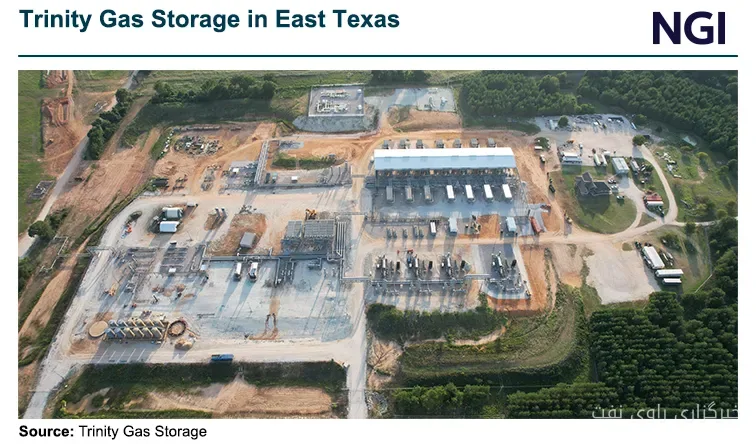
Trinity Gas Storage, located in East Texas, has increased its natural gas storage capacity to 37 Bcf (billion cubic feet) with the launch of its second phase of development. This expansion is particularly in response to the growing demand for energy following increased activity in data centers and high demand for electricity in the region.
Details of the Second Phase of Development
The second phase of development, with a capacity of 13 Bcf, has been commissioned, significantly enhancing the facility's ability to meet the increasing market demands. With this new capacity, Trinity Gas Storage is now better equipped to respond to daily energy needs and emergency requirements. This step, especially during peak consumption seasons, can help ensure sustainable energy supply in the region.
Read more: Decrease in LNG and LBM premiums in the European energy market
Impact on the Natural Gas Market
The increase in natural gas storage capacity in Texas could have widespread effects on the natural gas market. Given the climate changes and the need for sustainable energy sources, this expansion can act as a key factor in managing demand and providing energy during critical times. Additionally, the increase in storage capacity can help stabilize prices and prevent severe market fluctuations.
Moreover, this expansion allows Trinity Gas Storage to store natural gas when prices are low and supply it to the market when demand and prices rise. This approach can help optimize resources and enhance economic efficiency in the natural gas industry.
Future Outlook
Considering the growing demand for energy and the need for sustainable resources, further developments in the natural gas industry are expected in the near future. With this expansion, Trinity Gas Storage is recognized as a key player in energy supply in Texas and beyond, and it can contribute to improving energy infrastructure in the region.
Read more: Brazil's soybean oil exports continue in September with increased processing capacity · Decrease in natural gas production due to adverse weather forecasts