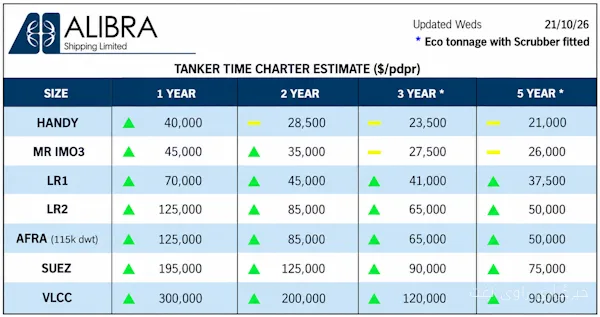
Estimates of oil tanker charters for the week ending October 21, 2026, indicate significant developments in the oil transportation market. Given the rising global demand for crude oil and existing limitations in tanker capacity, the charter rates for these tankers have increased significantly.
Tanker Market Analysis
Currently, the oil tanker market is facing multiple challenges. The demand for crude oil has surged due to increased fuel needs in developing countries and the return to economic activities following recent crises. This demand, along with existing limitations in tanker capacity, has led to a significant rise in charter rates.
Read more: Review of the Reconstruction of Oil and Gas Facilities in the Government Board Meeting
According to estimates, the average charter rate for supertankers has reached $60,000 per day, reflecting a 15 percent increase compared to last week. Additionally, the rates for medium tankers have also risen similarly to $40,000 per day. This increase in rates clearly indicates the existing tensions in the market.
Factors Affecting Charter Rates
There are several factors that influence tanker charter rates. One of these factors is seasonal changes in oil demand, which typically increase during the fall and winter seasons. Additionally, supply chain disruptions and logistical problems arising from global crises can lead to reduced tanker availability and increased charter rates.
Moreover, political and economic developments in oil-producing countries can also significantly impact tanker charter rates. For example, OPEC's decisions regarding oil production and economic sanctions against certain countries can directly affect tankers' access to the market.
Given these conditions, it is expected that tanker charter rates will remain high in the coming weeks. The global oil market is currently undergoing a major transformation, and these developments could have widespread implications for the oil transportation industry.
Read more: The Director General of HSE of the Ministry of Oil Visited the Drilling Rig 28 Fath · Brent Oil Price Reached $110.60