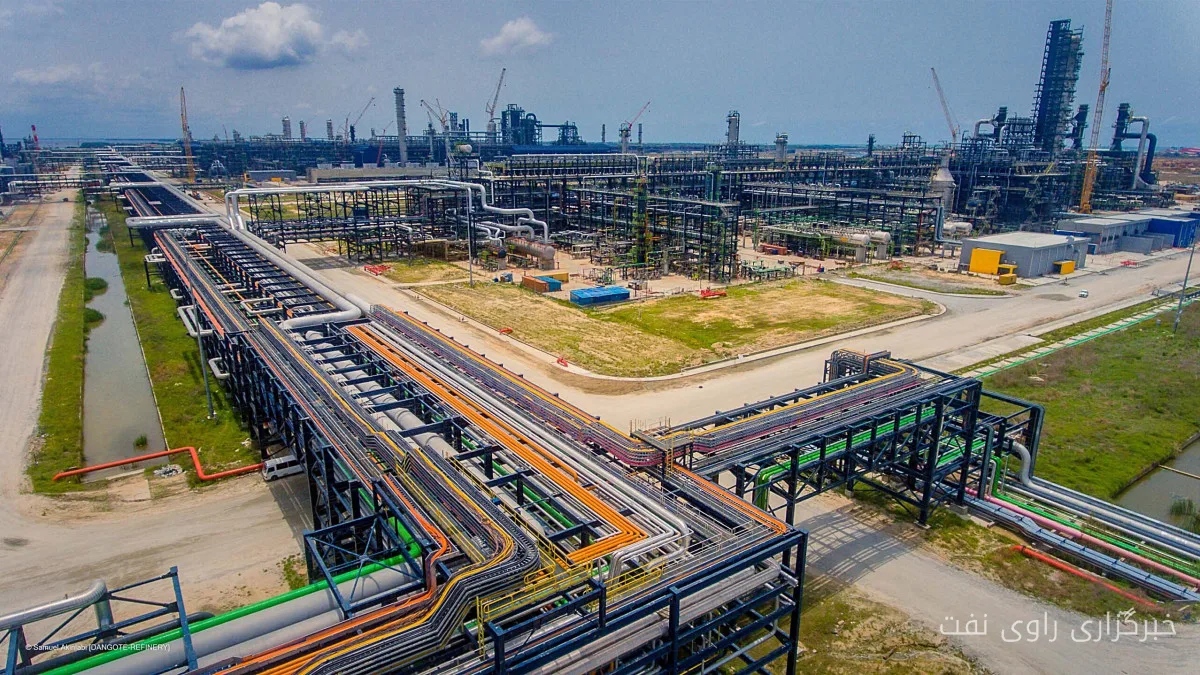
Dangote Refinery in Nigeria has achieved a net profit of $4.73 billion for the first nine months of 2026, while facing a loss of $117.2 million in the same period last year. The refinery's revenue has more than doubled to $22.48 billion from $9.19 billion.
Significant Increase in EBITDA and Cash Flow
EBITDA has risen to $5.52 billion from $627.6 million, due to increased crude oil processing and benefiting from high refining margins. The war in Iran and disruptions in fuel exports and refining in the Middle East have contributed to the increase in product margins, especially for diesel and jet fuel.
Read more: OPEC Ministers Warn of Rising Oil Transportation Costs
In this situation, Dangote Refinery has increased its exports and sent jet fuel shipments to Europe. With a capacity of 700,000 barrels per day, it has generated $3.68 billion in operating cash flow by September, showing significant growth compared to $364.7 million last year. The refinery's cash assets have reached $6.69 billion.
Development Plans and IPO
With a net liquidity of $650.8 million at the end of this period, Dangote Refinery is currently in the midst of its initial public offering plan. The company is looking to raise $1.6 billion in this offering, which estimates the refinery's value at approximately $47 billion. The registration period, initially set to close on October 13, has been extended to October 27 due to high demand.
This raised capital will be part of Dangote's next development plan. The company aims to double its refining capacity to 1.4 million barrels per day by 2029, positioning this refinery among the largest in the world. The refinery's capacity has increased from 650,000 barrels per day to nearly 660,000 barrels per day. Dangote Refinery has also reduced West Africa's dependence on fuel imports, with Nigeria's product exports gradually replacing shipments that were previously imported from Europe, the Middle East, and the United States.
Read more: OPEC Cuts Oil Demand Growth Forecast for 2026 to 400,000 Barrels per Day · Oil, the Resilient Industry in the Test of Resistance and Resilience



