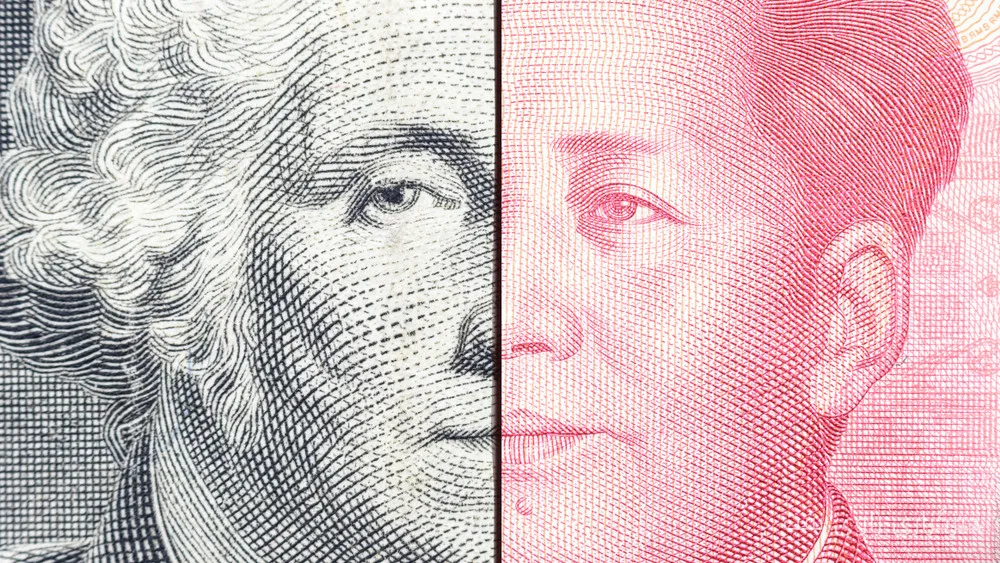
As China's largest trading partner, it is trying to leverage its influence over Iran's oil ahead of an important meeting scheduled for September 24 at the White House. In this meeting, no tangible achievements regarding Iran are expected; as U.S. President Donald Trump emphasizes the economic outcomes of this meeting, Chinese leader Xi Jinping has gathered a delegation of senior business executives to strengthen trade relations.
Dialogue Between the Foreign Ministers of China and Iran
On September 16, Wang Yi, China's Foreign Minister, met with Abbas Araghchi, his Iranian counterpart, in Beijing. This meeting was their fourth dialogue in the past three months. During these discussions, Wang emphasized the "comprehensive strategic partnership" between Beijing and Tehran, which reflects the inequality in this relationship in favor of China. According to data from analytics firm Kpler, China accounts for over 80 percent of Iran's maritime oil exports, while Iran constitutes only 1 percent of China's total global trade.
Read more: TotalEnergies announces final investment decision in the Ima gas field in Nigeria
Economic and Military Challenges
While seeking to strengthen dialogue and cooperation with Iran, China has also called for immediate actions to "reopen" the Strait of Hormuz. Before the U.S.-Iran war, this strait was the route for about one-fifth of the world's oil and gas supply. However, Wang did not directly pressure Iran and did not present a specific plan for mediation. According to Elizabeth Fried Larousse, a Chinese expert at the Pacific Forum think tank, China currently has no desire to take on heavy roles to bring the U.S. and Iran back to the negotiating table.
The cost of the war in Iran for the U.S. Department of Defense has exceeded $38 billion as of August 1. Meanwhile, Washington has transferred significant military resources from the Indo-Pacific region to the Middle East, such that the U.S. now has no aircraft carrier stationed in the Western Pacific for the first time since World War II.
At the same time, China is facing rising oil prices, with Shanghai crude prices reaching a record 929.4 yuan ($137.80) per barrel this month. This price increase follows Iran's proxy drone attacks on Saudi Arabia's east-west pipelines. In a way, China's strategic oil storage helps it remain insulated from rising prices. The U.S. Energy Information Administration (EIA) estimates that China added an average of 1.1 million barrels per day to its national oil reserves last year.
However, this reserve can only partially alleviate price pressures. Bill Bishop, a China-based expert in Washington, noted in a memo that "the global economic impact of rising petrochemical prices could harm the export markets that China's economy needs.
Ultimately, although China is recognized as a neutral country in the Iran war, it has provided significant support to Tehran. The large-scale purchase of Iranian oil has acted as an economic lifeline for the beleaguered Iranian regime. To circumvent stringent U.S. sanctions, China employs a hidden trade mechanism and a form of barter trade. However, the U.S. has multiple options to strengthen China's cooperation on Iran sanctions.
Read more: South Korea sets a goal to reduce dependence on Middle Eastern crude oil to 50 percent by 2035 · Abbas Araghchi presents Iran's conditions for reopening the Strait of Hormuz



