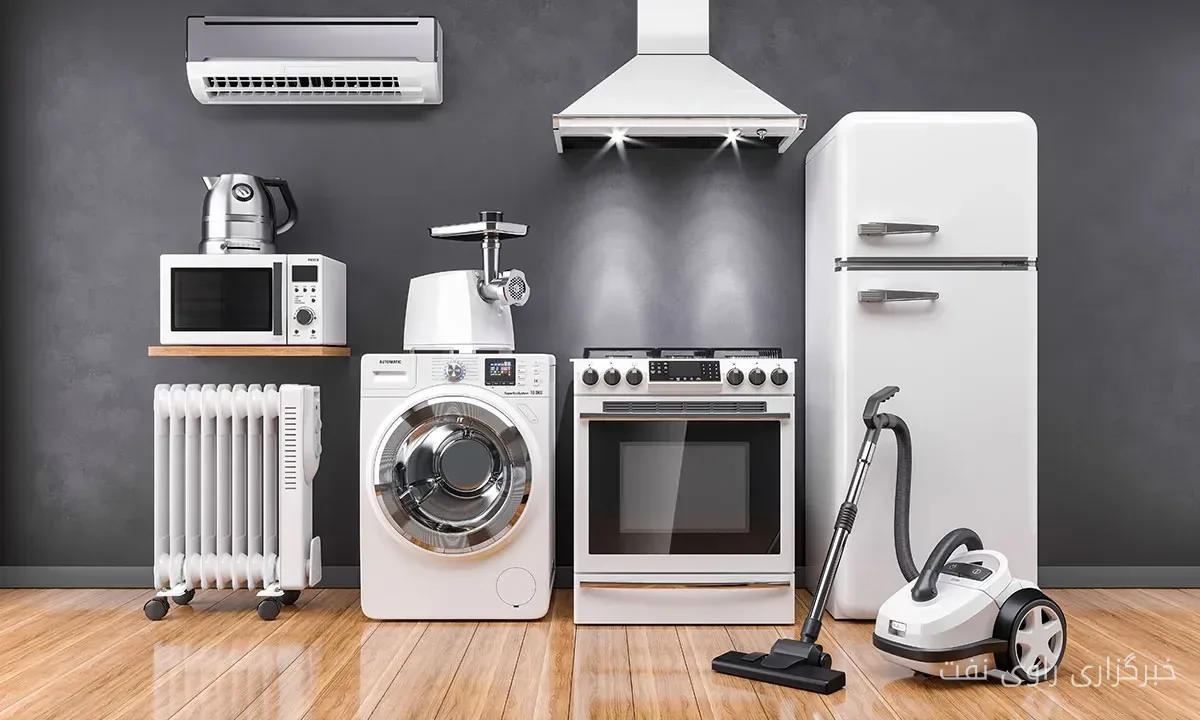
The Iranian home appliance market has recently faced a significant increase in prices and a decrease in household purchasing power; a situation that has created difficulties for consumers in securing essential goods and has also put pressure on sellers and businesses.
Price Increases and Their Impact on Production
Hosseyn Shahrastani, Vice President of the Home Appliance Union, announced that home appliance prices have increased by about 80% since March 1. This increase is primarily due to the rise in the cost of raw materials and products from upstream industries, including petrochemicals and steel. Shahrastani emphasized that the price hikes are not limited to a specific group of home appliances and have affected almost all product categories.
Read more: EIA's natural gas storage statistics reached 85 Bcf
Shortage of Goods and Purchasing Power
Despite the price increases, the market is currently not facing a noticeable shortage of goods. Shahrastani clarified that the decrease in people's purchasing power and a drop in demand have resulted in no serious shortages in the market, even with potential production or import limitations. He also emphasized that price increases do not necessarily mean price gouging; in many cases, the price of goods has risen from the source.
Another issue in the market is the difficulty of installment sales, especially for small businesses. In inflationary conditions, small sellers cannot easily tie up their capital in installment sales for long periods; because the potential increase in prices until the full receipt of installments may reduce or even eliminate the profit from the transaction. Meanwhile, many factories also prefer cash sales or set short deadlines for settlement.
Pressure on Small Businesses
Limited access to banking facilities has also put additional pressure on small businesses. Shahrastani believes that large stores, due to their banking relationships and contracts, have more opportunities to offer installment sales; an option that is not available to many small sellers. Furthermore, the increase in the monetary value of transactions does not necessarily mean an increase in income and profits for sellers. Despite rising prices, decreased demand and intense competition in the market have led to reduced profit margins for many businesses.
Overall, the home appliance market is facing a dual situation: severe price increases on one hand and a decrease in people's purchasing power on the other. Improving this situation requires not only controlling production costs and securing goods but also strengthening household purchasing power and creating better conditions for sellers to operate.